Aromateria Florio
The Florios of SicilyAromateria Florio is the Florio family’s Palermo spice business and, later, a fully developed apothecary. Its rise traces a change in scale and purpose: from a damp shop opened by Paolo Florio and Paolo Barbaro to a recognized enterprise importing goods through Mediterranean and overseas networks, and eventually to a store identified with both Ignazio Florio and his nephew Vincenzo Florio. The business makes the family’s ascent tangible, while exposing how trade depends on transport, storage, law, reputation, and inherited status as much as on the goods themselves.
Origins and the Palermo trade
The business begins against the background of an expanding spice market. Cinnamon, ginger, and other commodities pass through many hands and across long distances before reaching European counters; each stage of transport adds cost. Spices serve not only cooking but medicine and other uses, making medicinal goods especially valuable and accessible chiefly to those able to afford them. By the start of the nineteenth century, the trade that had enriched Venice is increasingly supplied by British and French colonial commerce. More ships bring herbs and other goods to European ports, prices fall, markets diversify, and Palermo’s aromatari organize as a guild with a church of their own.
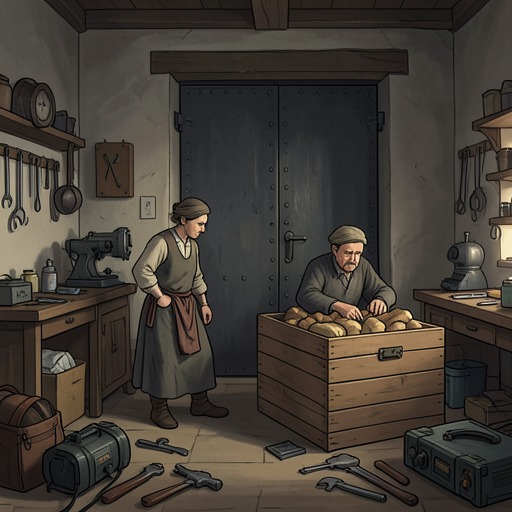
The Florio and Barbaro shop opens onto Piano San Giacomo. Its early premises are far from the prosperous enterprise the brothers hope to build: at dawn, Paolo enters a shop marked by mold, damp-swollen counters, and scattered bottles and jars. That material disorder sets the starting point for a business which must establish trust as well as find customers. The brothers’ commercial partnership gives the store a foothold, but neither the premises nor the city’s established trade welcomes them readily.
Reputation, exclusion, and growth
The brothers face suspicion from Palermo residents and resistance from competitors. Paolo remembers waiting at the shop’s doorstep for customers and for other sellers to reserve spices. The other aromatari keep their distance, partly from fear and partly to avoid offending Canzoneri. Carmelo Saguto, Canzoneri’s son-in-law, reinforces the hostility with rumors and contemptuous attention. By Christmas 1799, however, the shop has begun to grow and the brothers have become known. Their progress is slow and hard-won, set against the memory of a once-deserted counter and the commercial disdain they have had to endure.
The partnership with Paolo Barbaro ends after disputes over customs and business dealings. In February 1803, a new counter and herb-and-spice jars mark the shop’s changed appearance, while its repainted shutters bear only the name Florio. The Paolo Barbaro and Paolo Florio company has been dissolved for a month. The rupture follows further arguments, including a dispute over a consignment of buffed ivory and cinnamon: Paolo finds his brother-in-law at La Cala after a deal with a storekeeper has disposed of the goods at a very low price. The Florio name’s exclusive presence on the shutters makes the separation visible in the commercial space itself.
Expansion rests on storage and the ability to move goods through Palermo without paying import duties prematurely. The Florios rent cool, guarded rooms in the large Palazzo Steri property, behind the customs offices, where spices can wait for onward shipment or sale to other merchants. They pay the import tariff only when goods actually enter Palermo, following a common wholesale practice that makes warehouse rent preferable to early tax payments. Their stock connects several routes: goods from India arrive through British suppliers, while spices from French colonies are bought through Italian sailors and Livorno before being sold in Palermo. Their Via dei Materassai stockroom eventually becomes too small. The business has not matched the wealth of the Canzoneris, but its growing reach marks a substantial advance.
From spice shop to apothecary
A later transformation gives the store a more specialized identity. After six months of work, shelves are filled with new majolica jars and pots bearing the Florio name. Sacks of Peruvian cinchona bark await grinding in the warehouses on Via dei Materassai, in Piano San Giacomo, and at customs, with quinine powder to be extracted from them. The stock is no longer simply an assortment of goods for trade: its quantity, distribution, and intended processing point toward a purpose-built apothecary. Aromateria Florio becomes the real apothecary store Ignazio had imagined.
Ignazio retains one object from the old shop: the weighing scales his brother had used from the beginning of his working life. The scales remain in the renewed premises as a reminder of Ignazio’s origins and of the family history carried into the new business. Amid the new jars and the accumulated cinchona, the old instrument links commercial modernization to the labor and memory that preceded it.
The store’s identity also becomes explicitly intergenerational. Its sign names Ignazio and Vincenzo Florio’s apothecary store. When Vincenzo asks why his name has been added, Ignazio explains that Vincenzo is his nephew and his father’s heir. The business thus functions not only as an enterprise but as a vehicle for succession: the nephew’s place in the name recognizes his inheritance even as it binds the family’s future to the firm.
Law, status, and the limits of commercial success
The apothecary’s expansion brings it into conflict with established professional authority. Canzoneri challenges the Florios’ right to sell medicines, arguing that neither Ignazio nor Vincenzo is an apothecary and that they do not employ one. Vincenzo replies that the chief medical officer has granted them a specially issued authorization. When Pietro Gulì invokes the College of Aromatari’s rules and complains that the Florios have neither sought permission nor complied with guild requirements, Vincenzo counters that the guild does not own the law. The encounter reveals that commercial innovation is not simply a matter of bringing new stock to market: it also requires licenses and a contest over who may interpret the rules.
Wealth likewise fails to guarantee social acceptance. Isabella Pillitteri, a baron’s daughter whose family is indebted and landless, regards Vincenzo as a jumped-up shop boy despite hearing that his family has money. The baroness makes the distinction more explicit when she rejects him as a match for her daughter: money earned through labor cannot, in her judgment, overcome the status attached to blood. The store’s success gives the Florios economic standing, but aristocratic prejudice continues to deny that this standing is equivalent to inherited rank.
That tension follows the business into later generations and relationships. When Giulia Portalupi asks Vincenzo to acknowledge their daughters and provide them a legitimate father, he points to the legal barrier he believes his mother’s lack of consent creates; Giulia answers that the law requires notice of intent once he is over thirty. The exchange places family recognition beside the same questions of law and status that govern commercial access. The Florios can acquire goods, storage, licenses, and a recognized business name, yet legitimacy and acceptance remain contested. Aromateria Florio’s story is therefore both a record of commercial growth and a measure of the distance between new wealth and inherited privilege.